
Speak in Meetings in Another Language
Overview
This guide sets up the Sokuji desktop app so that the people in your meeting hear what you say, spoken in their language. You talk in your own language; Sokuji translates it and speaks it into the meeting through a virtual microphone. It works with any meeting app that lets you choose a microphone, including the Microsoft Teams and Zoom desktop apps, and uses KizunaAI (Powered by Soniox). The screenshots are from Sokuji 0.41.1 on Windows, speaking 中文 to an English-speaking meeting.
1Set up Sokuji with KizunaAI
If you have not done so yet, follow the KizunaAI quick start to install Sokuji and sign in.
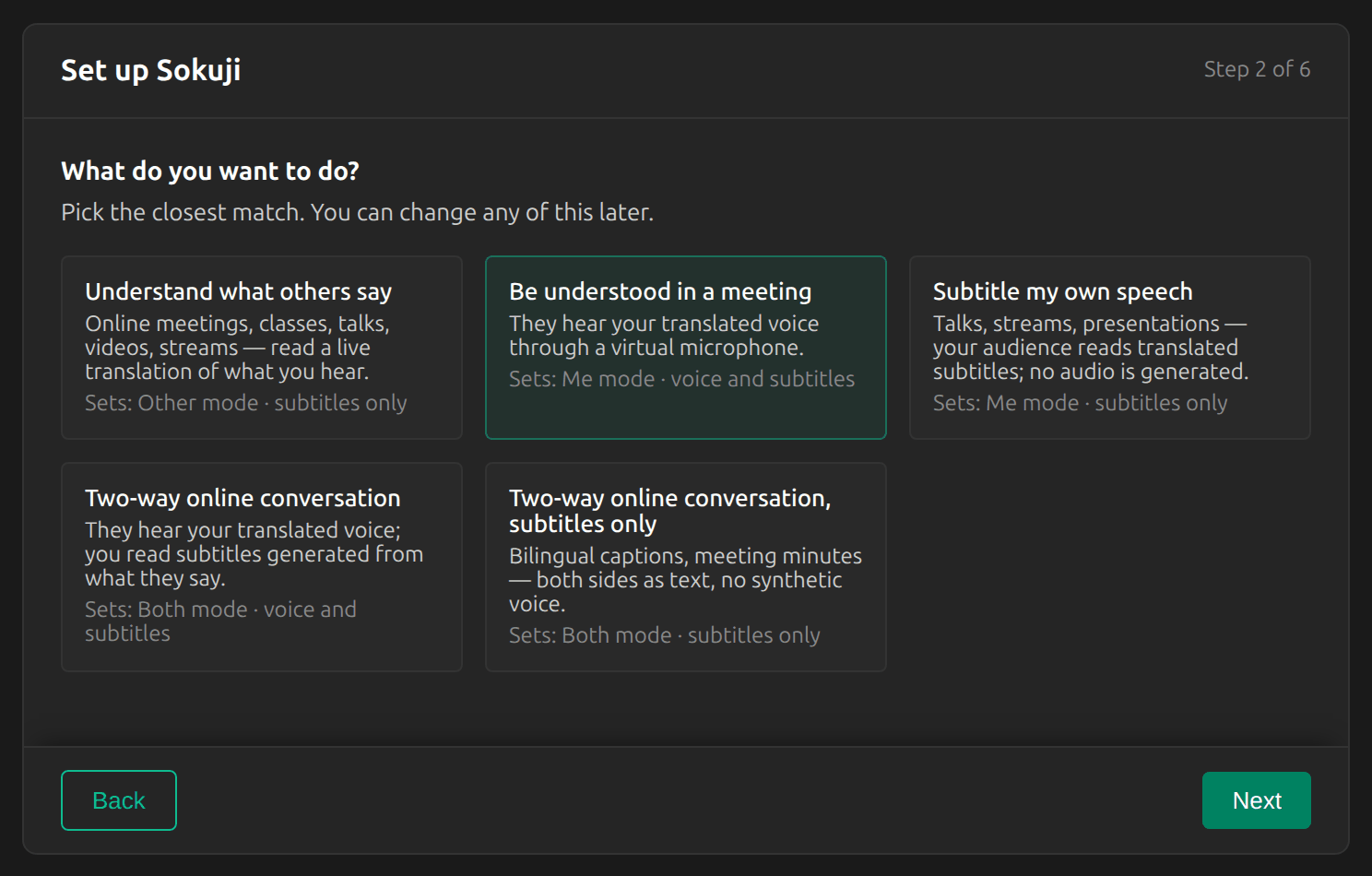
2Choose “Be understood in a meeting”
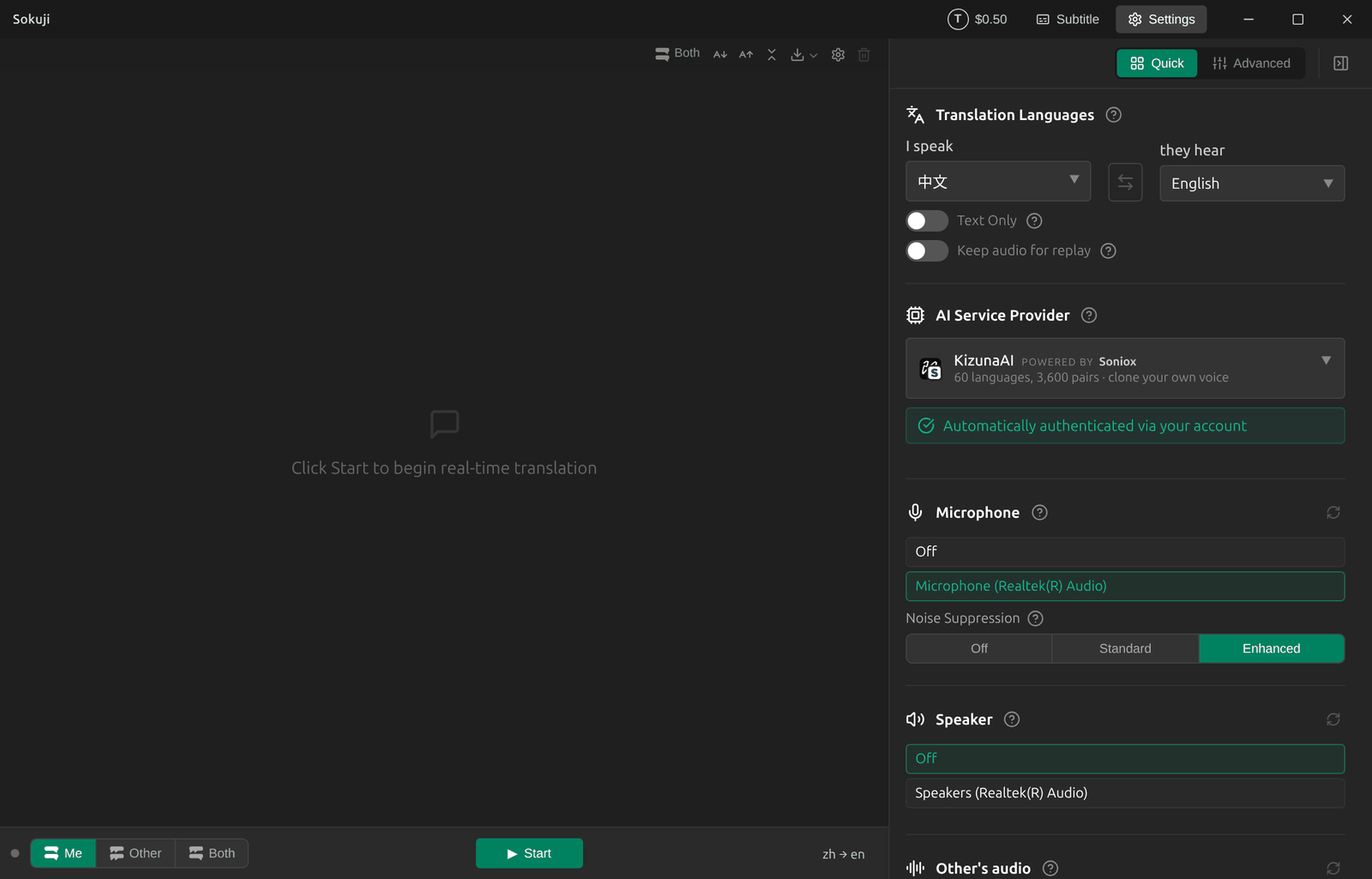
In the setup guide, choose Be understood in a meeting. It puts Sokuji in Me mode with voice and subtitles. If you have already finished the setup, click Me in the mode switch at the bottom left of the main window instead.
3Set the two languages
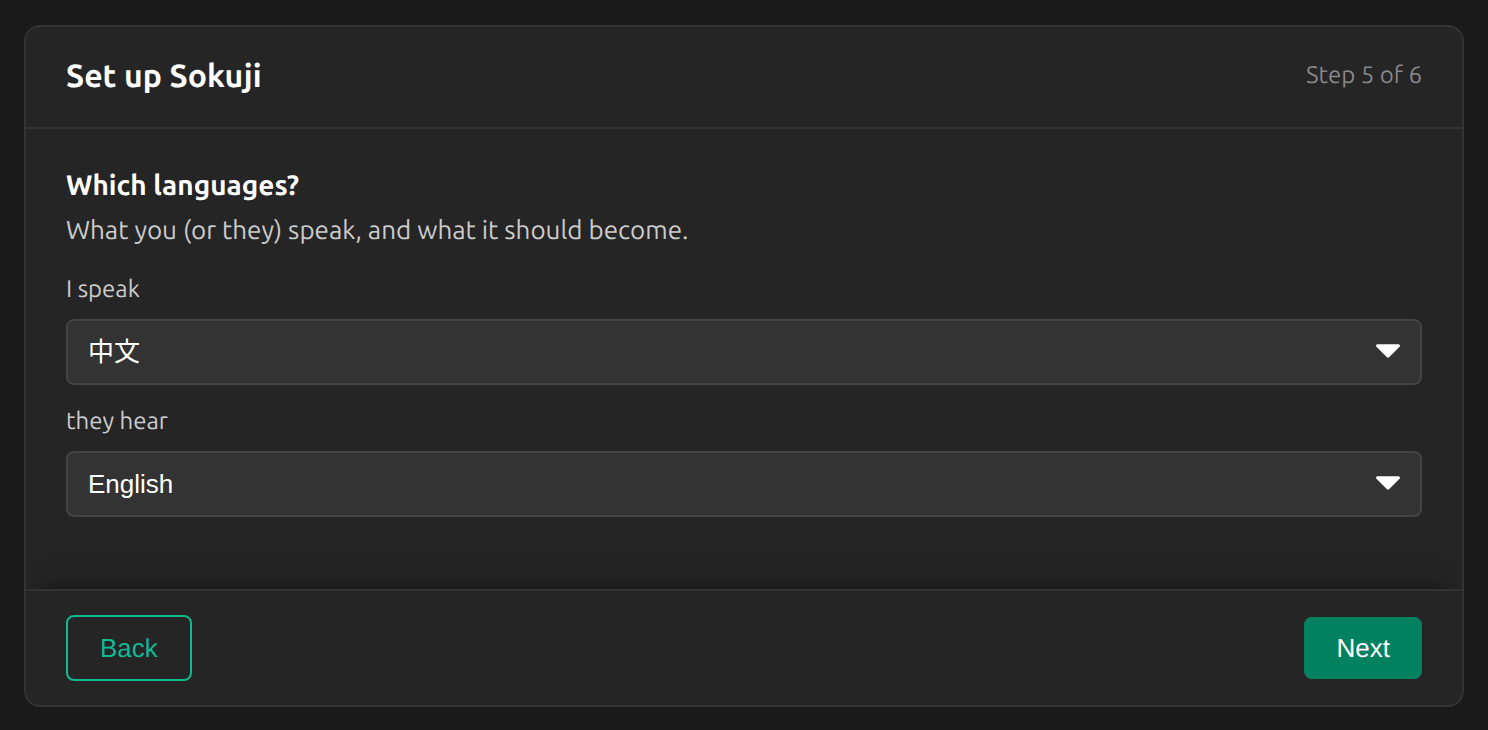
Set I speak to your own language and they hear to the language of the people in the meeting. Here: I speak 中文, they hear English.
4Install the virtual audio cable
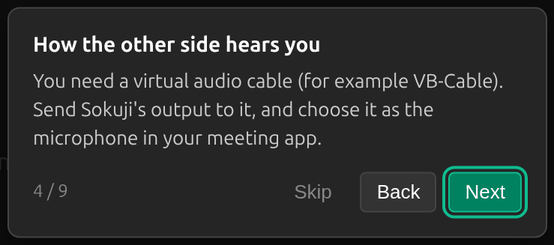
Your translated voice reaches the meeting through a virtual microphone. On Windows this is VB-CABLE, a free driver. While it is missing, Sokuji asks to install it each time it starts: click Install Now, and restart Windows if it asks you to. From then on, Sokuji sends its translated voice to VB-CABLE by itself.
Tip
On macOS the Sokuji installer adds a virtual audio driver, and on Linux Sokuji creates its own virtual microphone. The rest of this guide is the same.
5Choose your microphone
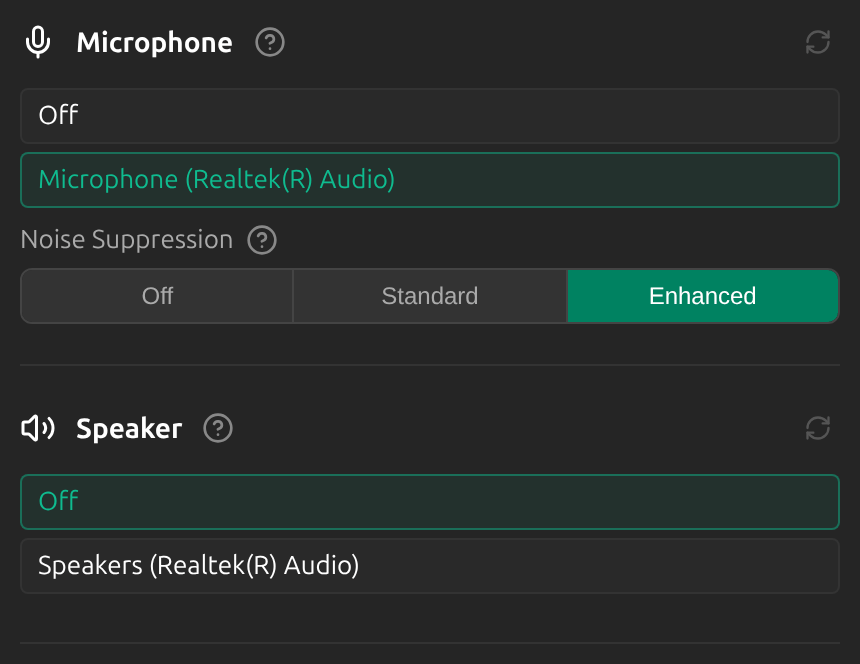
In Settings, under Microphone, pick your real microphone. Speaker is optional: choose your headset there if you want to hear the translated voice yourself, or leave it Off.
6Choose VB-CABLE as the microphone in the meeting app
In Microsoft Teams, open Settings → Devices and set the microphone to CABLE Output (VB-Audio Virtual Cable). In Zoom the same setting is under Settings → Audio → Microphone. Leave the speaker on your usual headset or speakers.
Tip
Your real microphone is selected in Sokuji, not in the meeting app: Sokuji listens to you, and the meeting app receives only the translated voice.
7Start speaking
Click Start in Sokuji and speak in your own language. The people in the meeting hear the translation in their language, and Sokuji shows what you said and its translation as subtitles.
Tips for Best Results
- Make a short test call first, for example with a colleague, and check that they hear the translated voice.
- Pause briefly at the end of each sentence: the translation is spoken once you finish a thought.
- Wear headphones, so that the meeting’s sound does not reach your microphone.
Frequently Asked Questions
Does the other person need to install anything?
No. Only you run Sokuji. The other person just hears a microphone that speaks their language.
Can I also understand what they say?
Yes. Switch to Both mode and follow the two-way meeting guide: Sokuji then also translates the other side into subtitles for you.
Can I choose the voice?
Yes. Open Advanced in Settings and pick one under Voice.
The other person hears nothing. What should I check?
Check that the meeting app’s microphone is CABLE Output (VB-Audio Virtual Cable), that Text Only is switched off in Sokuji, and that a session is running.
Troubleshooting
Still stuck? Send us feedback from the account menu, or write to support@kizuna.ai. You can also ask in GitHub Discussions.